

Storing wheat flour safely requires the right bag. But which material works best?
A non-woven fabric wheat flour bag1 is a soft, durable bag made without weaving, designed to hold wheat flour with minimal moisture exposure.
Many buyers hear about non-woven bag2gs](https://www.theodmgroup.com/woven-vs-non-woven-bags/)[^3] but don’t really know what they are. I was once in the same situation until I visited a packaging trade show. What I saw changed my mind about traditional woven bags3.
What does "non-woven bag2" mean?
The term sounds technical, but it's actually simple.
A non-woven bag2 is made from bonded fibers using heat or chemicals, instead of weaving yarns over and under.

How are non-woven bag2gs](https://www.theodmgroup.com/woven-vs-non-woven-bags/)[^3] made?
Unlike woven bags3 that use thread and weaving machines, non-woven bag2gs](https://www.theodmgroup.com/woven-vs-non-woven-bags/)[^3] use short or long fibers that are bonded together. There are three main processes:
- Spunbond4: Fast and cost-effective.
- Meltblown5: Produces fine fibers.
- Needle-punched6: Offers better strength.
These methods help control:
- Thickness
- Breathability
- Water resistance
Non-woven bags3 are often made from polypropylene (PP)7, which is recyclable and has good printability. They are popular in groceries, promotions, and now, food packaging.
What is the description of non-woven fabric?
What exactly does this material feel and look like?
Non-woven fabric feels soft, has a paper-like texture, and is semi-porous, making it ideal for breathable packaging8.

Key Properties of Non-Woven Fabric
| Property | Description |
|---|---|
| Texture | Smooth or slightly textured, no thread lines |
| Strength | Moderate tensile strength |
| Water Resistance | Optional – can be coated |
| Customization | Easy to print and shape |
| Breathability | Allows air to pass but blocks larger particles |
| Cost | Cheaper than woven for low-load applications |
Because of these features, non-woven fabric is used not only in bags but also in medical masks, diapers, and filters.
What are the disadvantages of using non-woven fabric?
Every material has its downside. Non-woven is no exception.
Non-woven fabric is less durable under heavy load, can tear more easily than woven, and may deform in high temperatures.

When Non-Woven Fabric May Fail
Let me share an example: one of my clients used a non-woven bag2 for 10kg wheat flour. After shipment, the bottom split.
Why? Here's what went wrong:
- The fabric was too thin.
- The seam wasn’t reinforced.
- It was exposed to humidity during transit.
Non-woven fabric is great for light or medium packaging, but it's not ideal for sharp objects or large weights unless reinforced with lamination9 or inner liners.
Common issues include:
- Tearing
- Weak seams
- UV sensitivity10
- Limited reusability11
If you're sourcing for long-distance shipping or bulk volume, this matters a lot.
What is the difference between woven and non-woven?
The names sound similar, but the structure is not.
Woven bags use interlaced threads for strength; non-woven bag2gs](https://www.theodmgroup.com/woven-vs-non-woven-bags/)[^3] bond fibers together without weaving.

Woven vs Non-Woven
| Feature | Woven Bag | Non-Woven Bag |
|---|---|---|
| Production Method | Weaving yarns | Bonding fibers |
| Strength | Very high | Moderate |
| Flexibility | Stiffer | Softer |
| Breathability | Low (unless perforated) | Medium to high |
| Appearance | Mesh-like surface | Smooth, paper-like |
| Cost | Higher | Lower |
| Custom Printing | Moderate (needs coating) | Excellent print surface |
For wheat flour, both can be used, but your choice depends on:
- Volume
- Transport conditions
- Required shelf life
Non-woven fabric bag or woven bag for wheat flour?
Which is better when packing something as sensitive as wheat flour?
For wheat flour, woven bags3 are more durable, but non-woven bag2gs](https://www.theodmgroup.com/woven-vs-non-woven-bags/)[^3] offer better branding and lower cost for short-term use.
Choosing Based on Application
| Use Case | Best Option |
|---|---|
| Long-distance shipping | Woven bag |
| Retail-ready, short-term use | Non-woven bag |
| Custom branding focus | Non-woven bag |
| Large weight (over 10kg) | Woven bag |
| Eco-friendly branding | Non-woven with PP |
Think About End Users
One of my American clients once tested both options. His team preferred the woven bag for bulk sales but used non-woven bag2gs](https://www.theodmgroup.com/woven-vs-non-woven-bags/)[^3] with high-res printing for smaller 2kg pouches sold at farmers' markets.
They made more impact visually with the printed non-woven, while the woven bags3 secured the product better during container shipping.
What are the pros and cons between non-woven and woven bags3?
Let’s break it all down.
Non-woven bags3 are lighter, cheaper, and great for marketing; woven bags3 are stronger, more reliable for bulk shipping12.
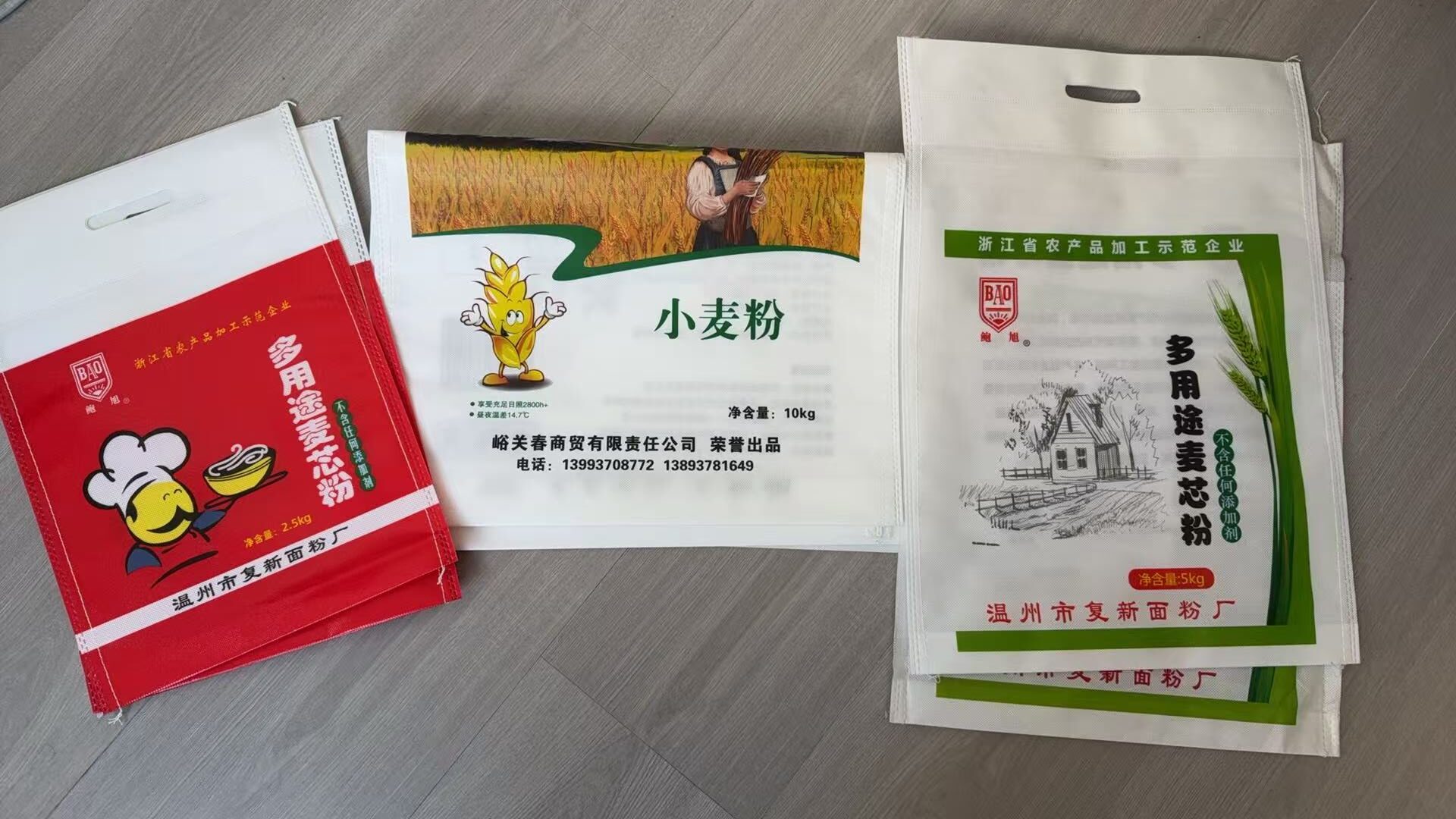
Pros and Cons Table
| Aspect | Non-Woven Bag | Woven Bag |
|---|---|---|
| Durability | Lower | High |
| Printability | Excellent | Moderate |
| Weight | Lightweight | Heavier |
| Recyclability | High (PP) | High (PP or PE) |
| Air permeability | Better | Lower |
| Cost | Lower | Higher |
| Application | Retail, small quantity | Bulk, export |
Both bags can be laminated for better performance. Laminated non-woven bag2gs](https://www.theodmgroup.com/woven-vs-non-woven-bags/)[^3] combine softness with water resistance13. Laminated woven bags3 prevent leakage and offer structure.
But remember: the wrong bag can break your brand.
If your client opens a ripped bag of flour, the damage goes beyond lost goods—it hurts trust.
Conclusion
Choose non-woven for branding, woven for strength.
-
Explore the advantages of non-woven fabric bags for wheat flour storage, ensuring freshness and quality. ↩
-
Learn about the manufacturing process of non-woven bags and their unique properties. ↩ ↩ ↩ ↩ ↩ ↩ ↩ ↩ ↩ ↩
-
Understand the strengths of woven bags, especially for heavy-duty applications. ↩ ↩ ↩ ↩ ↩ ↩ ↩ ↩ ↩
-
Discover how the Spunbond method contributes to the efficiency and cost-effectiveness of non-woven bags. ↩
-
Understand the Meltblown process and its role in creating fine fibers for various applications. ↩
-
Find out how Needle-punched technology improves the durability of non-woven materials. ↩
-
Explore the benefits of using polypropylene in non-woven bags, including recyclability and printability. ↩
-
Learn about the significance of breathable packaging in maintaining food quality and safety. ↩
-
Discover how lamination improves the performance and durability of non-woven bags. ↩
-
Learn about the impact of UV exposure on non-woven materials and how to mitigate it. ↩
-
Find out about the reusability of non-woven bags and tips for their maintenance. ↩
-
Explore the best practices for packaging flour for bulk shipping to ensure product integrity. ↩
-
Discover methods to enhance the water resistance of non-woven bags for better performance. ↩
